Introduction
If you’re planning a new patio, driveway, or walkway, you’ve probably asked yourself: “Should I go with pavers or poured concrete?” It’s one of the most common questions we hear from homeowners in the Waterloo Region, and it’s a smart one to ask. Choosing the wrong surface can mean headaches down the road — cracks, shifting, ugly repairs, or wasted money on something you don’t love looking at every day.
At Soares Landscaping, we’ve spent years designing and building custom outdoor spaces across Ontario. While we primarily install pavers for their durability and design flexibility, we also install concrete in certain situations where it makes sense structurally or for budget reasons. Our goal isn’t to “sell you” on one option — it’s to give you the clearest, most honest comparison so you can feel confident in your decision.
In this blog, you’ll learn how pavers and concrete stack up when it comes to cost, durability, maintenance, aesthetics, and long-term value. You’ll also see common problems homeowners face with each, when we’d recommend one over the other, and answers to frequently asked questions.
What’s the Difference Between Pavers and Concrete for Patios, Driveways, and Walkways?
Pavers are individual units — usually made of concrete, stone, or brick — that are laid in a pattern on a prepared base. Each piece locks into place with joint sand, creating a flexible surface that can move slightly with the ground.
Concrete, on the other hand, is a single poured slab. It’s formed, reinforced with rebar or mesh, and finished in one continuous surface. It can be broom-finished, stamped, or coloured for different looks.
The biggest difference is flexibility. Pavers are modular and can be lifted, replaced, or adjusted individually. Concrete is monolithic — once it cracks, the whole section is compromised.
How Much Do Pavers vs. Concrete Cost in Ontario?
One of the first questions we hear is: “How much does it cost?” Here’s what most homeowners in the Waterloo Region can expect:
Paver projects: Many patios, walkways, or driveways fall in the $15,000–$40,000 range, depending on size, design, and materials chosen. Larger, high-end outdoor living spaces can certainly go beyond that.
Concrete projects: A basic poured concrete patio or driveway often falls in the $8,000–$18,000 range in Ontario, with stamped or coloured finishes on the higher end.
Why the difference? Pavers involve more labour, base preparation, and materials. They’re a premium surface, built to last decades. Concrete, while less expensive upfront, may cost you more in the long run if major repairs or replacements are needed.
Factors that affect cost include:
Site conditions (grading, drainage, access)
Excavation and base requirements
The size and complexity of the project
Material choices (basic pavers vs. premium stone-look pavers, broom finish vs. stamped concrete)
Which Lasts Longer in Ontario’s Climate: Pavers or Concrete?
Ontario’s freeze-thaw cycles are tough on any hardscape material. Here’s how the two options hold up over time:
Pavers: Because they are individual units with joints filled with sand, pavers can flex with ground movement. This makes them resistant to cracking. A properly installed paver surface can last 30+ years, and individual pavers can be replaced if damaged.
Concrete: A continuous slab is more vulnerable to cracks from freezing, thawing, and heavy loads. Even with proper installation, cracks are common after 5–10 years. While sealing can help, once concrete cracks, repairs are usually visible.
In our experience, pavers almost always outlast concrete in Ontario’s climate.
What Are the Maintenance Requirements for Pavers vs. Concrete?
Pavers
Modern polymeric sands have changed the game. Quality products like Techniseal and Flexlock now carry 15–20 year warranties when installed correctly. That means you shouldn’t need to think about joint sand replacement until around the 12–15 year mark.
Other maintenance is straightforward:
Optional sealing every few years to boost colour and stain resistance
Occasional sweeping or rinsing
Spot repairs if a section settles — with pavers, you can replace just the affected area
Concrete
Concrete benefits from sealing too, but stamped concrete in particular requires resealing every 2–3 years in Ontario’s climate. Without it, colour fades and the surface can start scaling or peeling. Repairs rarely blend seamlessly with the original finish.
Which Looks Better: Pavers or Concrete?
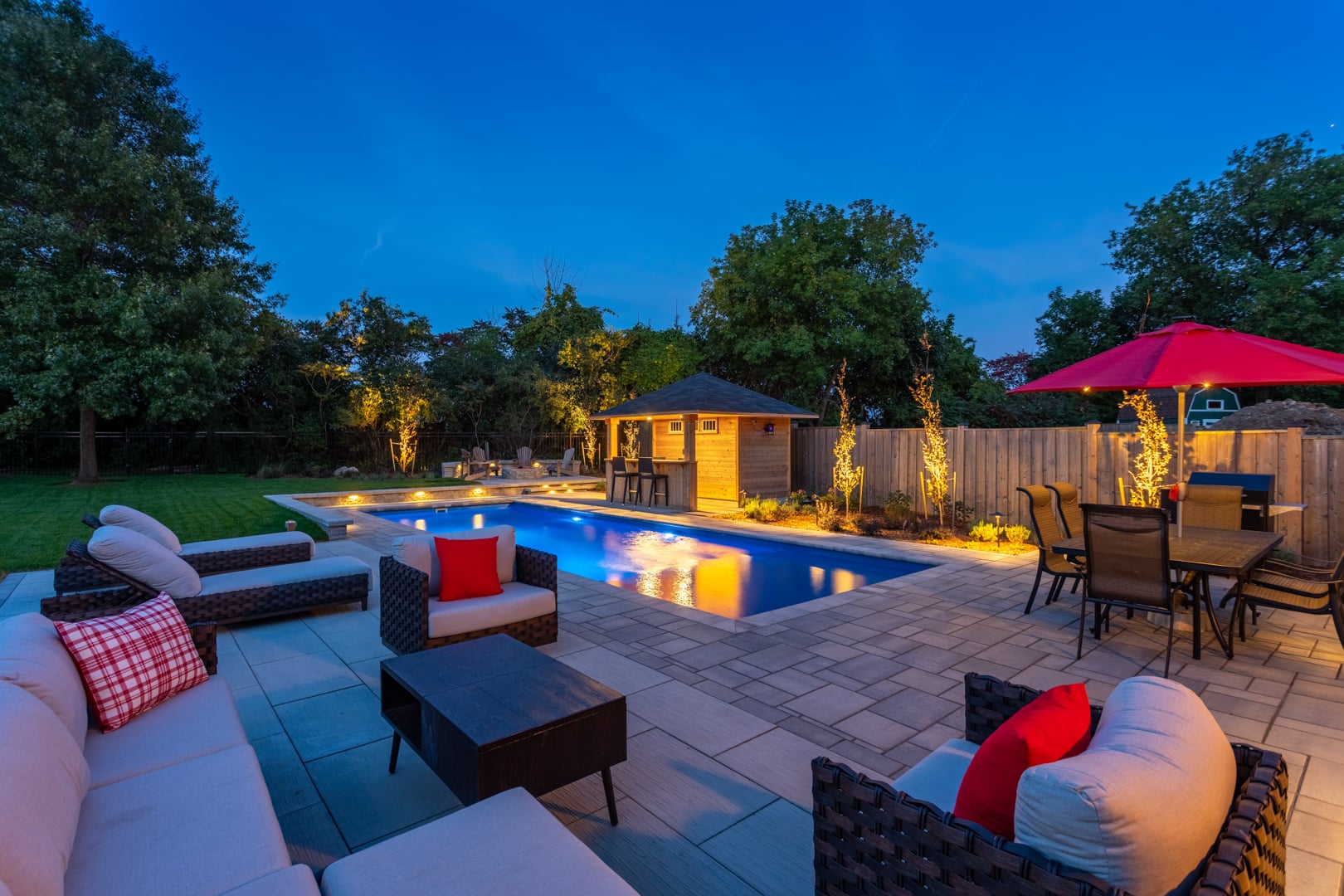
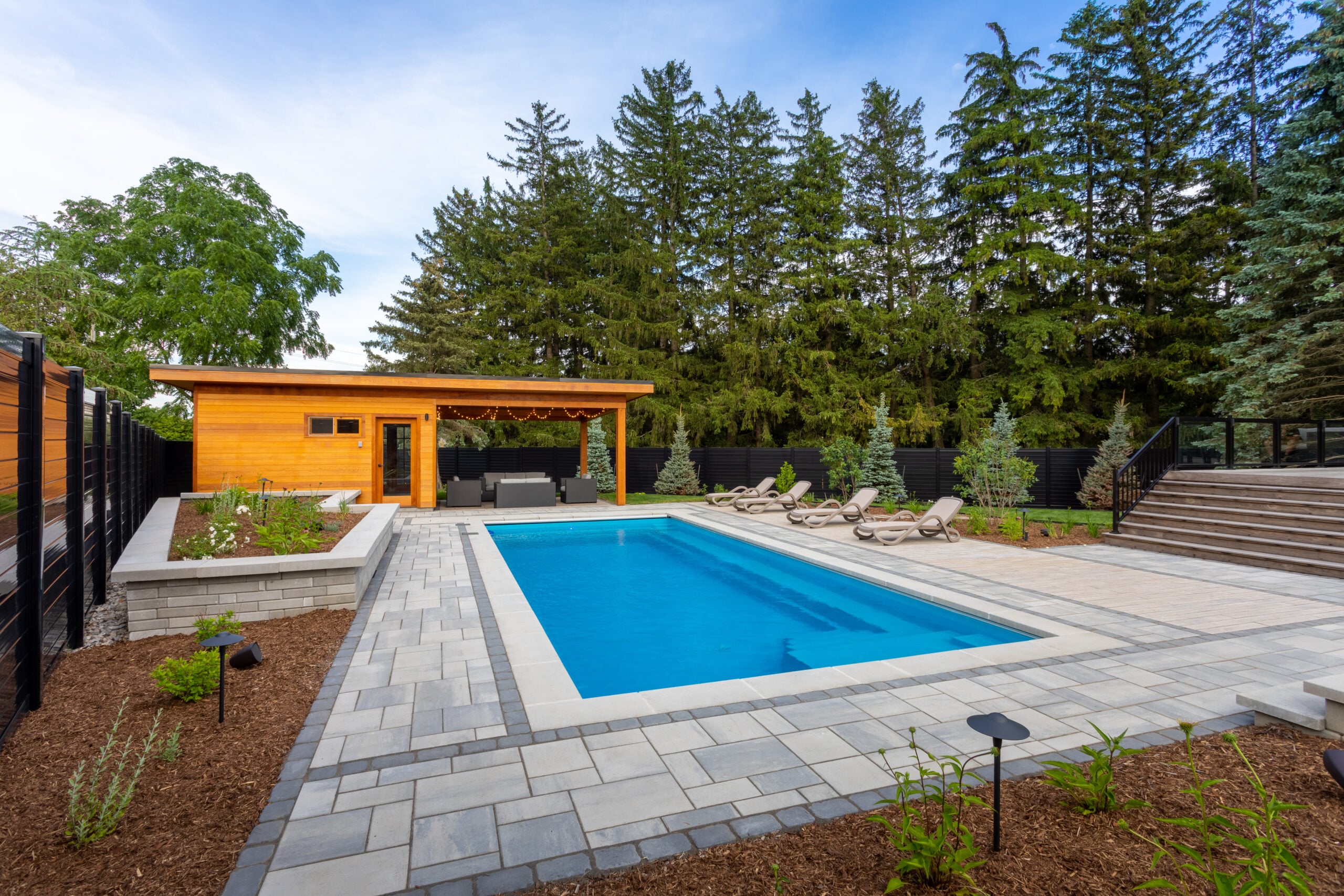
Pavers give you endless design choices — colours, shapes, textures, borders, and patterns. They can mimic natural stone or create sleek, modern looks that dramatically boost curb appeal.
Concrete provides a clean, uniform surface. Stamped and coloured finishes offer some variety, but options are limited compared to pavers.
From a resale perspective, pavers almost always add more value in buyers’ eyes. Many local homeowners even mention in their reviews that our attention to design detail exceeded expectations.
Why Continuity Matters in Your Outdoor Space
One of the biggest mistakes we see is when homeowners mix and match too many materials — a stamped concrete driveway, a paver walkway, a natural stone step, and a broom-finish concrete patio. On paper, it may feel like “variety.” In reality, it almost always looks tacky, disjointed, and like an afterthought.
Your outdoor space will feel more intentional when you pick one material family and commit. Whether that’s pavers, concrete, or natural stone, sticking with a consistent palette creates flow from the driveway to the front walk, around the side yard, and out to the backyard patio.
At Soares Landscaping, we guide homeowners through material selection not just for performance, but for continuity. That way, your property feels cohesive and finished, not pieced together.
What Are the Common Problems With Pavers and Concrete?
Both surfaces can have issues if not installed correctly:
Pavers: shifting, weeds, or fading if corners are cut on prep or product quality
Concrete: cracking, scaling, or mismatched patches when repairs are attempted
The good news? With proper installation, most of these problems are preventable. At Soares Landscaping, we follow strict base prep standards and use premium materials with manufacturer warranties to protect your investment.
Are Pavers or Concrete Better for Driveways, Patios, or Walkways?
Here’s how we usually guide homeowners:
Driveways: Pavers handle heavy loads and flex with movement, so they last longer and look better over time. Concrete is less expensive upfront, but cracks are almost guaranteed.
Patios: Pavers shine for design flexibility and beauty. Concrete can work if budget is the top concern, but stamped versions often cost close to pavers.
Walkways: Both can work, but pavers typically blend better with landscaping and are easier to repair if settlement occurs.
Can Pavers and Concrete Be Combined in the Same Project?
Yes — and sometimes that’s the best approach.
For steps, we almost always recommend pre-cast concrete steps or segmental retaining wall blocks designed to integrate with pavers. Poured concrete steps combined with pavers usually lead to cracking and alignment issues.
For footings or structural slabs, poured concrete makes sense. Think pergolas, outdoor kitchens, or pool surrounds where a solid structural base is required. The finished surfaces can then be completed with pavers.
Which Option Is the Best Investment for Homeowners in Waterloo Region?
If you only look at upfront cost, concrete comes out cheaper. But if you care about durability, beauty, ease of repair, and long-term value, pavers consistently win — especially in Ontario’s climate.
That’s why we recommend pavers for most outdoor living projects. Many of our clients mention in their reviews that they chose us because they wanted a solution that would still look great in 20 years, not something that would need patching in 5.
Frequently Asked Questions About Pavers vs. Concrete in Ontario
Do concrete driveways always crack here?
Cracking is very common in Ontario due to freeze-thaw cycles. Even well-installed concrete slabs are likely to show hairline cracks within 5–10 years.
Are pavers slippery in winter?
Not typically. Pavers have texture and joints that help with traction, unlike smooth concrete.
Which needs sealing more often: pavers or concrete?
Pavers don’t need sealing unless you want to enhance the colour. Stamped concrete, however, usually needs resealing every 2–3 years in our climate.
How long will each surface last?
Pavers: 30+ years with minimal maintenance. Concrete: 20–30 years structurally, but cracks and aesthetic issues are likely within the first decade.
What causes polymeric sand to fail?
Poor installation, shallow joints, early rain during curing, or constant water flow. With today’s quality sands and proper installation, failures are rare, and most homeowners don’t need to think about replacement for 12–15 years.
Conclusion
The choice between pavers and concrete comes down to what you want your outdoor space to look like — and how you want it to perform — 5, 10, or 20 years from now. Concrete will save you money upfront, but pavers give you durability, beauty, and long-term peace of mind.
At Soares Landscaping, we’ve built our reputation on guiding homeowners in the Waterloo Region to make the decision that’s right for them, not just what’s easiest for us. If you’re weighing your options, we’d be happy to provide you with an honest and transparent recommendation.